
Our Team
Global leaders in time series forecasting, optimization, and applied AI.

Dr Christoph Bergmeir
Forecasting & AI Systems
Christoph is one of the world's leading forecasting researchers. His models are used by Google, Meta, and Walmart ... and now, RabbitHawk.
Christoph is a María Zambrano (Senior) Fellow in the Department of Computer Science and Artificial Intelligence at University of Granada, Spain, and an Adjunct Senior Research Fellow in the Department of Data Science and Artificial Intelligence at Monash University, Australia. Christoph has spent his career designing architectures that make forecasting adaptive, explainable, and genuinely useful. He brings mathematical precision and global credibility to RabbitHawk - but pairs it with a rare bias toward simplicity: a drive to make the complex understandable and the abstract practical.
Achievements
- 13,200+ citations across forecasting and machine learning research
- 2022: María Zambrano Senior Fellowship, University of Granada
- 2022: Ramón y Cajal Fellowship offer — ranked 2nd in Computer Science nationwide in Spain
- 2021: Dean's Award for Excellence in Research Enterprise, Monash University
- 2018: Australian Research Council Discovery Early Career Researcher Award (DECRA)
- Facebook/Meta Research Award recipient (DeepForecast project with Rob Hyndman)
- Invited keynote speaker at NeurIPS 2024 and International Symposium on Forecasting 2023

Dr Peter Stuckey
Optimization and AI Advisor
Peter J. Stuckey is a Professor in the Faculty of Information Technology at Monash University, and project leader in the Data61 CSIRO laboratory.
Prof. Stuckey is a pioneer in constraint programming, the science of modeling and solving complex combinatorial problems. With a Google Scholar h-index of 69, his research interests include: discrete optimization; programming languages, in particular declarative programming languages; constraint solving algorithms; bio-informatics; and constraint-based graphics. He enjoys problem solving in any area, having publications in e.g. databases, timetabling, and system security, and working with companies such as Oracle and Rio Tinto.
Achievements
- 2009: Recognized as an ACM Distinguished Scientist
- 2010: Google Australia Eureka Prize for Innovation in Computer Science
- 2010: University of Melbourne Woodward Medal
- 2019: Elected as a Fellow of the Association for the Advancement of Artificial Intelligence
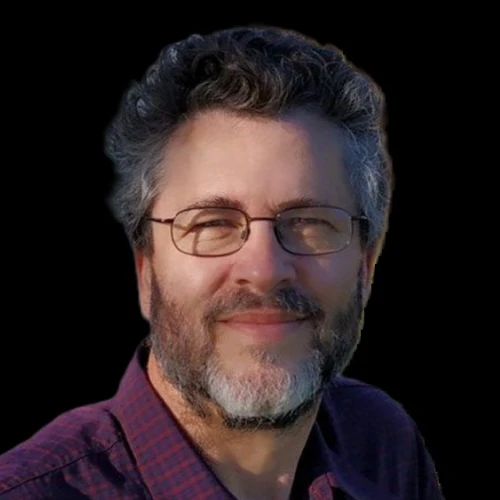
Dr Wray Buntine
ML / Gen AI - LLM Advisor
Professor Wray Buntine is Australia's foremost scholar for the statistical analysis of text and related structured content and their predictive modeling.
His global reputation was built over several decades of state of the art machine learning, generative AI and large language model research. Professor Buntine has authored 18 book chapters, 48 journal articles, and 81 refereed conference papers. His work includes several software products and two patents, with over 13,000 citations and a Google Scholar h-index of 51.
Professor Buntine is currently Director of the Computer Science Program at VinUniversity. He is set to serve as the General Chair for the 2024 Asian Conference on Machine Learning in Hanoi. He co-edits the ACM Transactions on Probabilistic Machine Learning and serves on editorial boards for several other journals.
He has worked on projects for the Helsinki Institute for Information Technology, NASA Ames Research Center, University of California, Berkeley, and Google. Previously, he was the founding director of the Master of Data Science program at Monash University, where he also directed the Machine Learning Group.
Achievements
- Top 0.75% most cited researchers globally in Artificial Intelligence
- 13,000+ citations, h-index of 51, with 200+ publications
- 1986: Artificial Intelligence Best Paper Award at ECAI
- 2013: NASA Certificate of Recognition for creative software development
- Two US patents including personalized recommendation systems
- General Chair, Asian Conference on Machine Learning (ACML) 2024
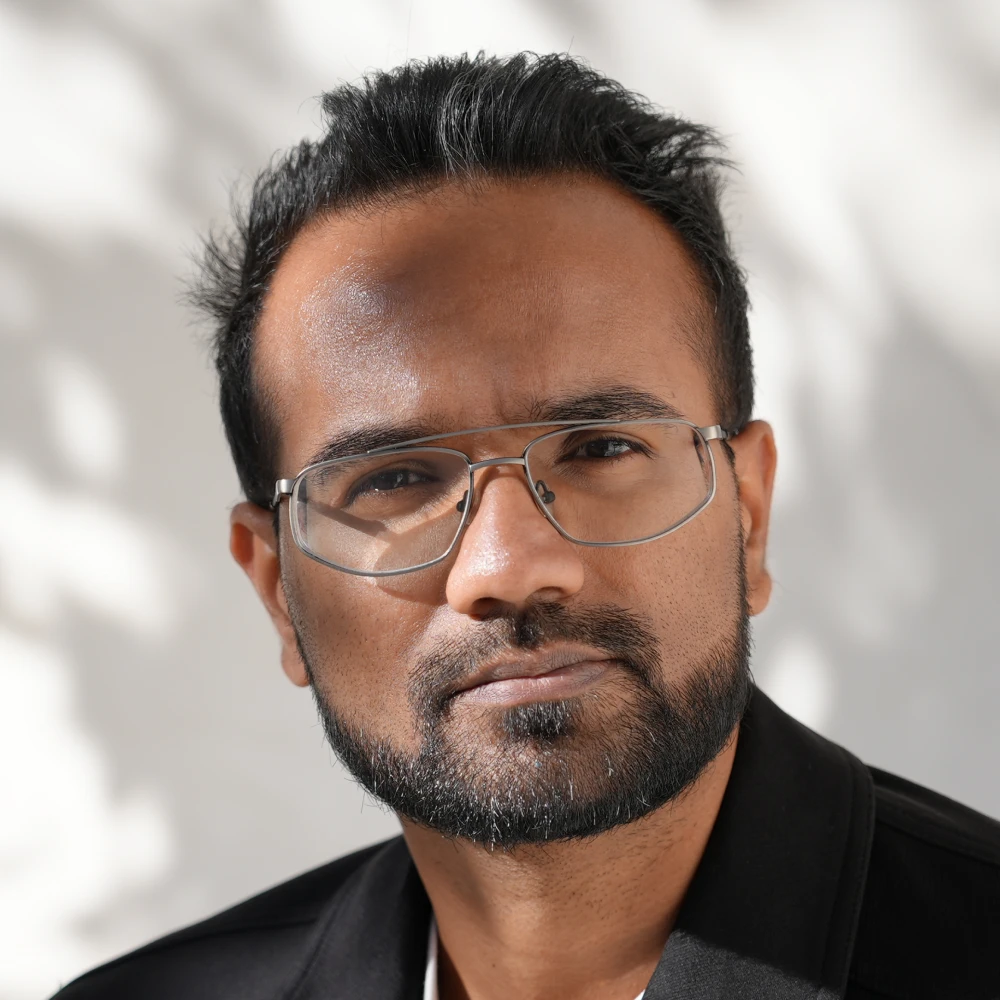
Dr Abishek Sriramulu
Graph AI & Adaptive Modeling
Abi is a machine-learning scientist who turns chaos into pattern. His research in multimodal and graph AI explores how connected data - transactions, conversations, behaviors - reveals cause and effect.
At RabbitHawk, Abi gives forecasting purpose: not just predicting what might happen, but mapping how to get from today's "A" to tomorrow's "B." He's the architect behind RabbitHawk's ability to reason across structured, unstructured, and contextual data - the intelligence that connects numbers to meaning, and foresight to action.
Achievements
- Pioneer of Adaptive Dependency Learning Graph Neural Networks (ADLGNN) for time series
- Published in Information Sciences, Expert Systems with Applications, and ACM CIKM
- PhD in Machine Learning at Monash University under Prof. Bergmeir
- Co-founder & CTO of Tymestack — graph AI pricing engine with beta savings exceeding €300M annually
- ARC and Meta/Facebook research grant recipient
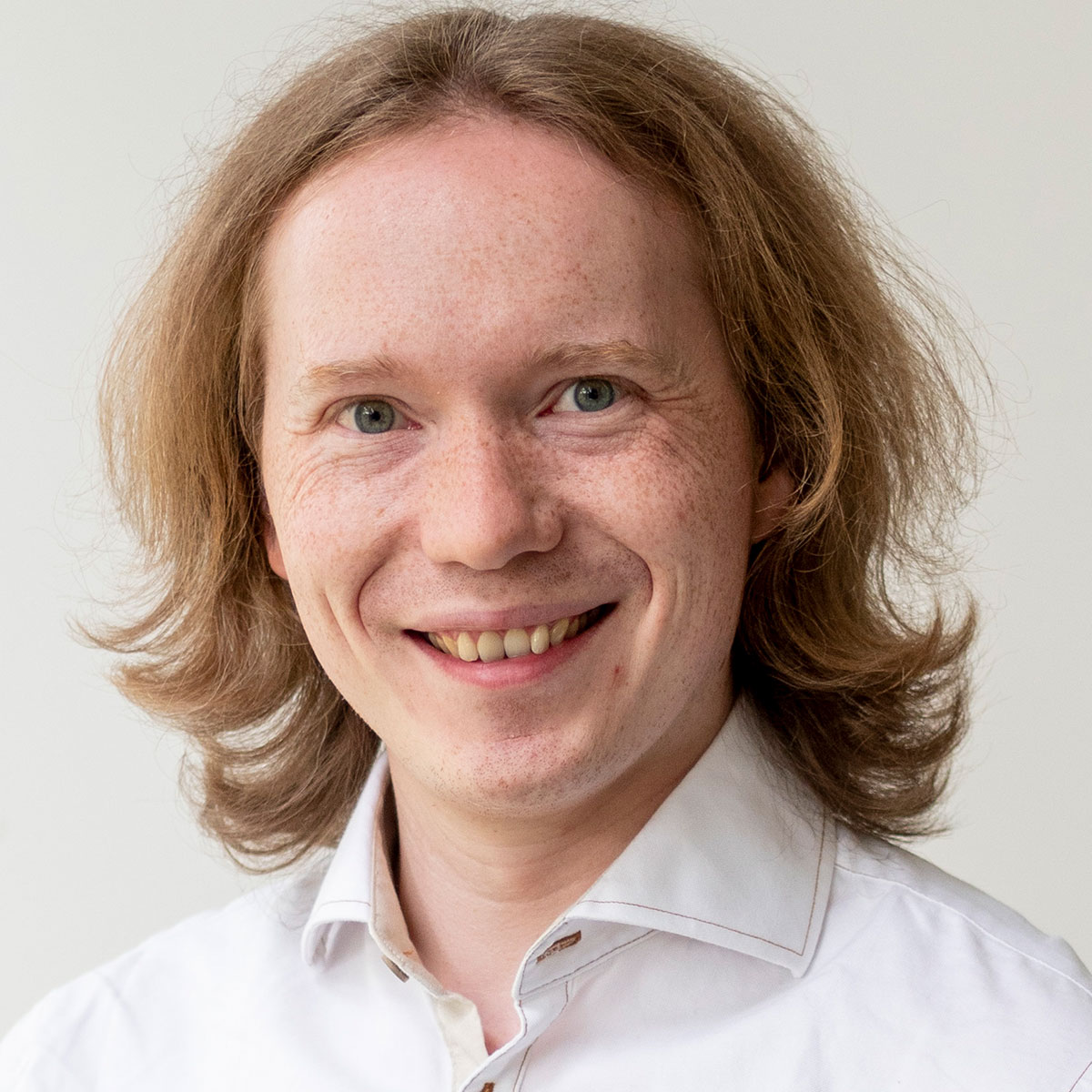
Dr Frits de Nijs
Optimization & Agentic Learning
Frits is a world-class optimization scientist working where reinforcement learning meets real-world constraints. Formerly with CSIRO and Monash, he's built autonomous systems that plan, adapt, and improve under pressure - from smart cities to complex supply chains and rostering systems.
At RabbitHawk, Frits unites forecasting and optimization into a living partnership - creating self-learning decision loops that continuously refine themselves. His obsession: systems that don't just solve problems once, but keep getting smarter every day.
Achievements
- Australian Research Council DECRA grant recipient (DE230100046)
- PhD from Delft University of Technology in multi-agent decision making
- Ranked 3rd globally (of 23 teams) in NeurIPS 2021 ML4CO optimization challenge
- Published at AAMAS, CP, ACM e-Energy, and Journal of AI Research
- Research with CSIRO Data61 on renewable energy optimization and smart grid systems

Paul Shale
Alignment Strategy & Product Design
Paul has managed large multi-disciplinary teams in the USA, Australia, and New Zealand with deep experience in retail, construction, infrastructure, consulting, government and tourism.
Paul designs our goal-setting and alignment models, facilitates 90North sessions for customers, and develops architecture to allow customers to harness our team's expertise - turning advanced analytics into tools that are easy to use.
Achievements
- B.Com / LLB (Hons), University of Auckland; Harvard Business School — Disruptive Innovation with Dr Clayton Christensen
- Former CEO of FCB NZ, Roadtrippers AU, Consortium and CCO of Nextspace
- AUT University Decade Award (2000–2010) — one of 10 key contributors to the university's growth
- Auckland Airport Market Development Manager — drove non-aeronautical revenue strategy to 50% of total revenue
- Founded Consortium agency (12 years) — driving growth and exits for Behance, 42 Below, ihug, Charlie's
- Led teams of 250+ across USA, Australia, and New Zealand
RabbitHawk helps your team reach possibly impossible goals by turning measurement into meaning.
Connect with our team to discover how we can transform your planning processes and drive measurable outcomes.
Let's Talk